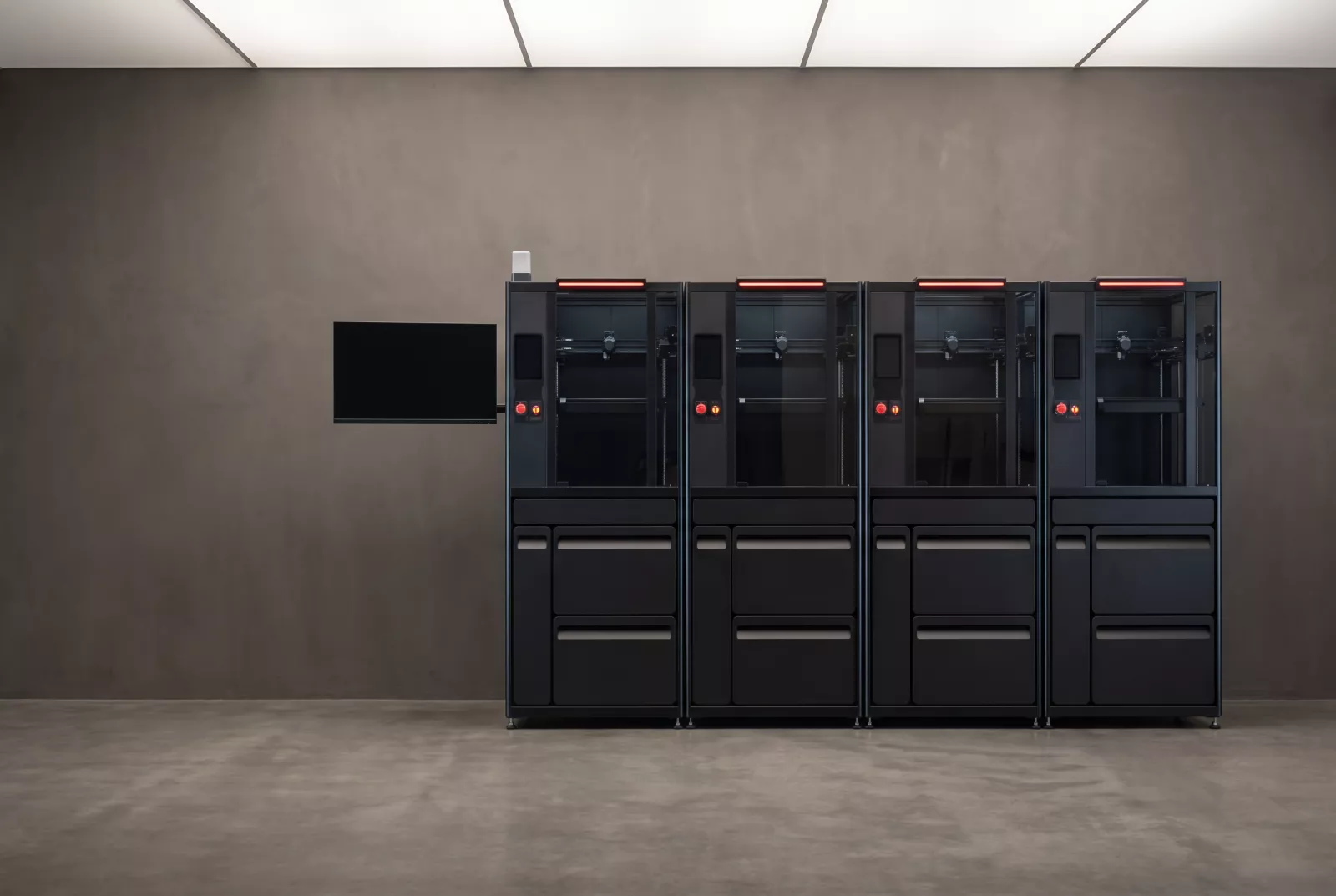
Designed for production, not prototyping
Up to 10 tonnes of output per year, reliable production, and the same requirement: to run production runs continuously, including at night and at weekends.
Standard volumes
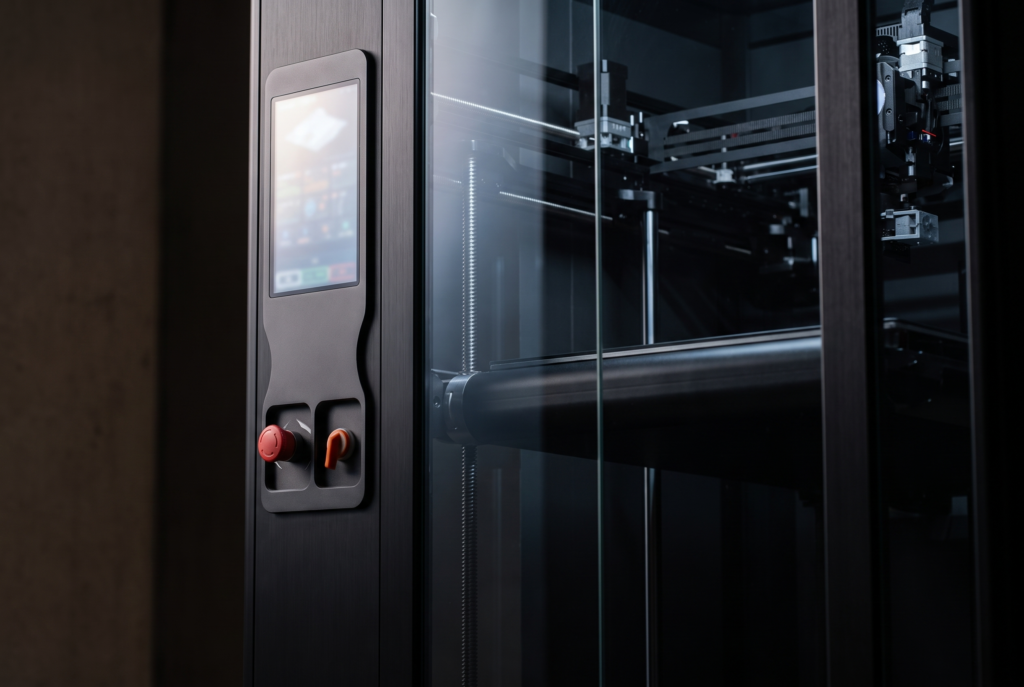
Features
- Print volume: 280 × 450 × 500 mm
- Material capacity per machine: 10 to 50 kg depending on options
- Compatible materials: PPA · ABS · PA12 · TPU · PEKK and many others
- Unattended operation: Yes
Large format
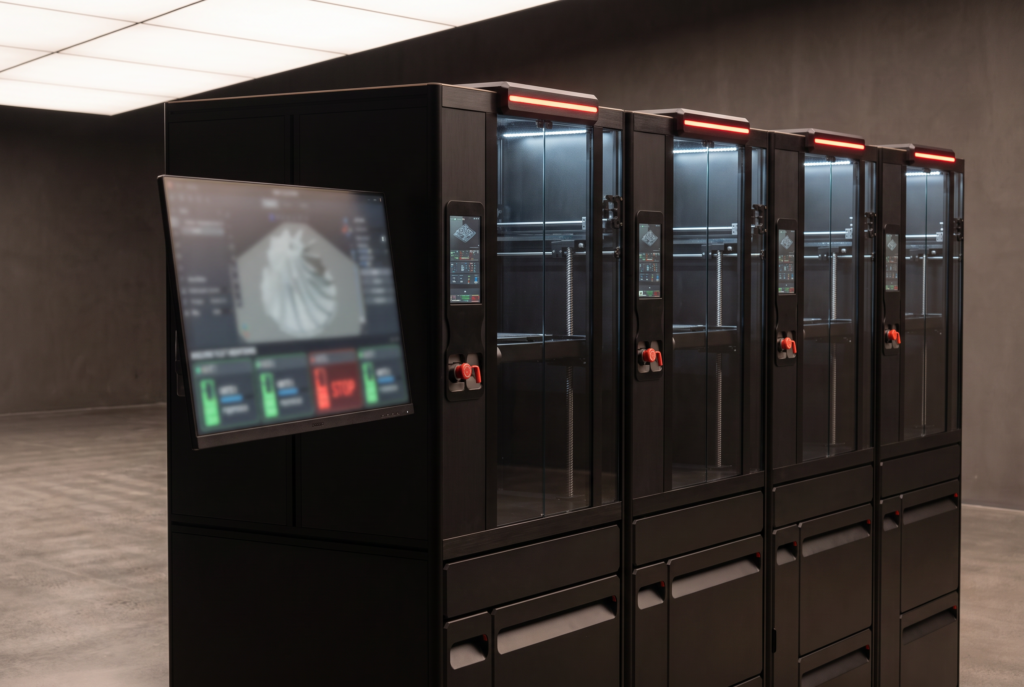
Features
- Print volume: 500 × 900 × 1000 mm
- Material capacity per machine: 10 to 50 kg depending on options
- Compatible materials: PPA · ABS · PA12 · TPU · PEKK and many others
- Unattended production: Possible depending on options
Made to measure
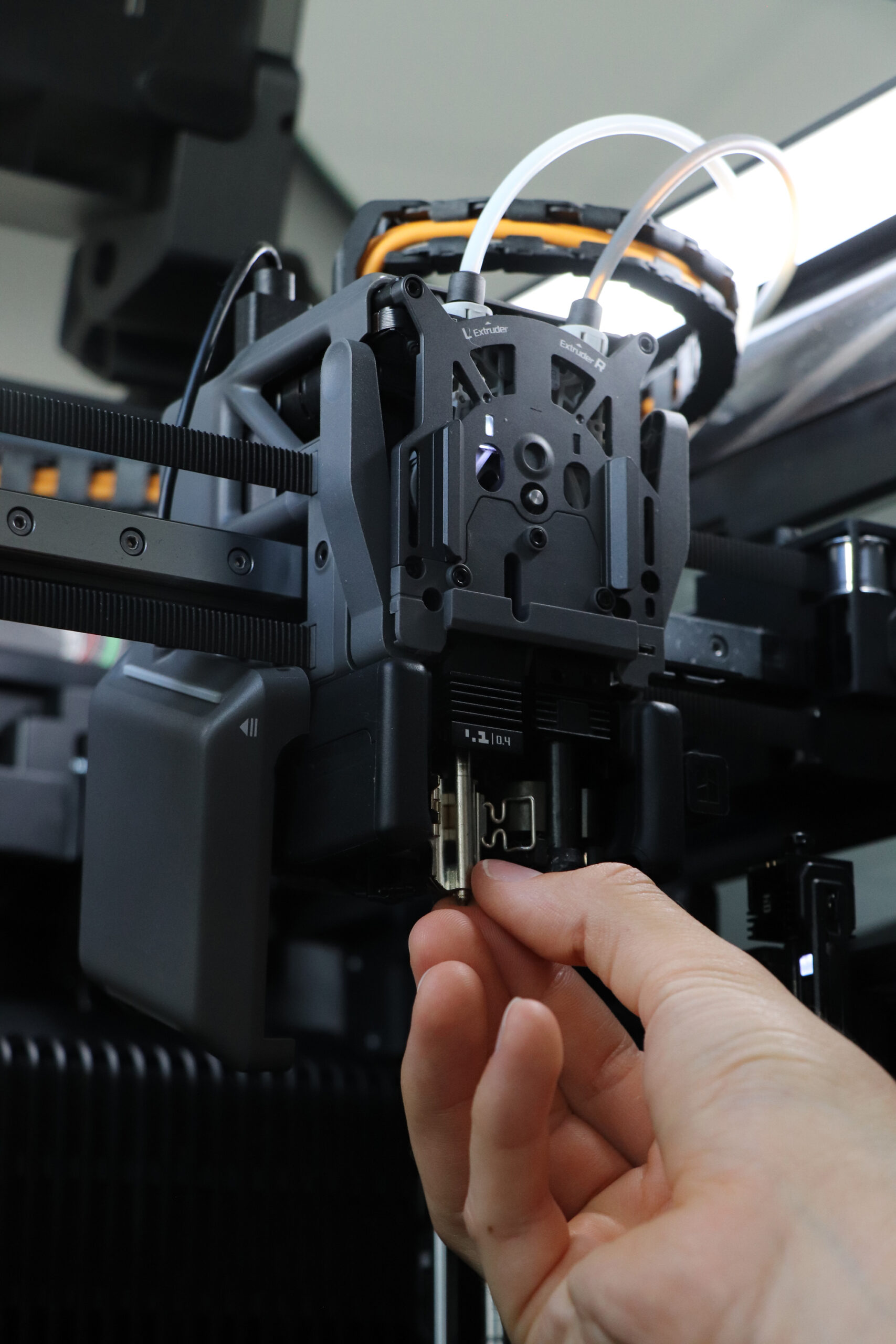
Features
When the part or production line imposes certain constraints, the machine is designed around them: format, number of print heads, automated unloading, and connection to the existing conveyor.
The design is based on your part and your annual production volume.
We assess your requirements before making any commitment. If 3D printing isn’t the right solution, we’ll tell you so.
Three ways of producing, three hidden costs
50 CHF
per item
The hidden cost of a mould
The listed price of a mould: 5 to 50 k€. For a run of 1,500 units, the tooling alone costs 50 CHF per unit. That’s before the cost of the material.
70 %
of lost material
The hidden cost of CNC
No tools are required, so it seems cost-effective. But 60 to 80 per cent of the raw material ends up as shavings, and with materials like PEEK or PPS, that’s immediately reflected in the bill.
The CNC machine itself isn’t expensive. It’s the labour costs that are high. It’s difficult to scale up.
40 %
actual occupancy
The hidden costs of standard printing
Machines sold for prototyping, a warranty that becomes void when used for commercial purposes, an incident at 3 am that costs a whole night’s work, and no traceability on a part-by-part basis.
The problem with the print farm isn’t the printing. It’s everything that happens between the parts.
800 pieces, four paths
| Moule | CNC | Asie | Niroline | |
|---|---|---|---|---|
| Duration of the first piece | 4–8 weeks | A few days | 8–12 weeks | Less than an hour |
| Human presence | 1 operator | 1–2 permanent staff members | None (third party) | None |
| Tools requiring damping | 5-50 k€ | Specialist tools | Included with MOQ | None |
| If the design changes | New mould | Reprogramming | Full cycle | New file |
On the other three paths, something leaves your workshop: time, a man, or your files.
‘The Three No’s’
01
No special tools required
You can move from one batch to the next without needing a new mould. Production can start straight away, and making a change simply requires a new file.
02
Unattended
The machine manages its consumables, its queue and the removal of finished parts. It runs production runs overnight and at weekends. No operator is required; only basic training is needed.
03
Without relocating
You produce everything in-house. You retain control over your deadlines, quality and files.
Which machine is right for your part?
Send us your files and your annual volumes. We’ll tell you which configuration meets your needs, and at what cost.